
Thursday, June 20, 2013
Jess' Twist Out on Blown Out Hair

Mixology || Making Your Own Carrot Oil
LOO'S NOTE: When making carrot oil from scratch, you will find that you are using a lot of carrots to make a small amount of oil. The beauty of the below recipe is that the addition of an oil to your process makes the creation easier and increases your yield, though it is obviously a mix of carrot oil and the oil you chose. A similar process can be applied to make coconut oil and avocado oil.
 RECIPE SOURCE
Supplies Needed

Supplies Needed
- Veggie peeler
- Hand grater or food processor
- Crock pot
- Fine mesh strainer or cheesecloth
- Glass mason jar
Ingredients
-2 organically or home grown carrots
-olive, coconut, sunflower, or sesame oil, to cover
-olive, coconut, sunflower, or sesame oil, to cover
Method
- Wash and peel the skin of the carrots.
- Grate carrots with the use of a hand grater or food processor.
- Place the grated carrots in a crock pot and pour the oil of your choice to cover. Note: I used 2 1/4 cups of oil or 18 ounces.
- On your crock pot’s lowest setting, maintain a warm temperature — infusing the oil for a full 24-72 hours. Note: I use the “warm” temperature setting on my crock pot. Try not to allow the temperature of the oil to rise above 100-105 degrees farenheit. You will notice the oil becoming orange in color.
- Once the infusion process is complete, pour the carrots and oil mixture through a fine mesh strainer or cheesecloth and strain.
- Reserve the oil and compost the carrots.
- Label and store the oil in a glass mason jar in the refrigerator until ready for use. Will keep for 6-8 months if stored properly.
For more recipes like this, check out Frugally Sustainable.
Monday, June 17, 2013
Türkiye Yeşilay Cemiyeti
I have been thrilled to be a guest of the Turkish Green Crescent Society, Kütahya branch this last week. As part of the I AM: art as an agent for change, I’ve been part of a small team of people from the UK, Italy and Turkey who are working together to better understand recovery from addiction in different cultures and contexts, whilst developing an arts project with people in recovery, based on self-portraiture. We’ll be facilitating artists exchanges/residencies in all three countries over 2013/14 and having an exhibition in 2014 alongside a symposium in Manchester. For me one the the key parts of this work is around cultural exchange and its been an honour to meet and work with so many people in Kütahya who have made me welcome and shown me so much of their remarkable country: from the artisans and Türkiye Yeşilay Cemiyeti members, to the Governor of the region. The artists studios in Kütahya were particularly outstanding, and I made one or two lovely purchases.


It was such a varied visit and included a visit to the untouched and beautiful Aizonai Temple. Thank you to Ali Osman Ozleblebici for arranging this - and with your colleagues - absolutely everything else. How do you photograph a Greek temple, or Roman amphitheatre? I chose to sit for a couple of hours (beautiful solitude). Here’s a small moment, sat under the loud-speakers that call people to prayer in the village in which the ruins are.
It was a strange and exciting time to be in a country whose politics and culture are different and unknown to me. I was inevitably drawn into the seemingly carnival atmosphere of the demonstrations in Taksim Square and whilst I didn’t find myself in the firing line of the security services, it was exhilarating to be in such a huge area of the city that had no policing and was under the control of the people. Yes, the streets were barricaded, but it didn’t feel lawless - it seemed in fact, that it had developed its own rules and regulations pretty seamlessly. Artists had built all sorts of facilities and were engaging with families in lively debate. Political groups set out their turf, and a range of stunning banners, (that alas, I could’t bring myself to liberate - for they were things of beauty indeed) and groups of people took it in turns to street clean.

Whilst different political groups vied for attention to their cause, it was the passion that really hit me the hardest and made me acutely aware of how biased journalism is. The images I get from the television are of angry young men and are always of of ‘extremism’, not rational, articulate, inspirational people, eager to share what they see as inequity. That said, these same young men and women let out much of their frustrations through the most euphoric dancing and singing I have ever been part of in a public space. Forget your flash-mob - this is the real McCoy. Exhilarating. Like any demonstration, you’ll get people who want an excuse to fight and that’s a real shame for all those families that simply wanted to express themselves. Of course the ballot-box is preferable to riots - I only hope that those in power have listened to such a loud expression of frustration and the country doesn’t descend into a divisive civil conflict.
Ironic that Burger King seemed to be the busiest restaurant on the fringes of the Square and to be sure, Istanbul is certainly a city that is building and building like mad. It was a quiet moment of bliss for me to escape to the impossibly beautiful - and even more impossible to describe, film or photograph - Hagia Sophia. Forgive my little film which I hope, though a little oblique, gives some sense of the place. Museum, mosque and basilica and over 1000 years old...if anything gives me a feeling of the numinous, it’s this. With all my cynicism to monotheistic religions put to one side, the beauty and craftsmanship is a thing of wonder. The things humans can do eh? Just a shame about all the other stuff we do too.
So, the blog is a little add-hock whilst I am fulfilling commitments away from my desk, so bare with it over the next few weeks and normal service will resume as soon as possible.
A reminder of those free MORTALITY events
Dr Iona Heath at 3:00 on Friday 5th July. Details by clicking on MORTALITY.
Dr Sam Guglani, Molly Carlilie and Victoria Hume on Monday 8th July from 2:00 - 6:00. Click on MORTALITY for details.
The exhibition is open to the public from Monay the 8th July until 16th August at the Holden Gallery here at MMU. It features work by Ian Breakwell, Felix Gonzalez-Torres, Douglas Gordon, Julian Opie, Cornelia Parker, Bob and Roberta Smith and Sam Taylor Wood.
If you are a health professional, work in palliative care, or at in hospices - if you have been affected by bereavement, if you find conversations around death difficult or if you are an artist that works in end of life settings - these sessions and the exhibition are for you and offer a rare opportunity to hear from some truly original and inspirational thinkers.
If you’re curious, please get in touch by emailing valeriaruizv@gmail.com
You can follow MORTALITY on twitter @mortality2013

ARTS INCLUDED IN WELLBEING MEASURES
This is important stuff! Our engagement in the arts is for the first time to be recognised as one of the factors that contributes to wellbeing in the Office for National Statistics’ (ONS) Measuring National Wellbeing Programme. I know a number of us have lobbied the ONS to include the arts, and this is our just-deserves.
“...important contributors to well-being, for example, measures relating to arts and culture were excluded as there is no single UK measure. Classing the UK criterion as aspirational provides a more balanced approach. Every effort will still be made to include UK measures. Where this is not possible, flexibility exists to ensure that measures widely considered important for inclusion in the set of measures of national well-being can still be adopted.”
Furthermore, “...it was agreed that a measure of mental well-being based on the Warwick Edinburgh Mental Well-being Scale should be added to the personal well-being domain in order to provide a more holistic view of subjective well-being.”
Read the report by clicking on the ruler...it’s short and it’s highly significant.
WINSTON CHURCHILL MEMORIAL TRUST
Do you work in any of the Creative Industries? Would you like the chance to research new and innovative ideas overseas? Have you thought of applying for a Churchill Travelling Fellowship? They send over 120 people each year, from all walks of life and every corner of the UK, on an overseas travel sabbatical. Would you or someone you know, benefit from this experience? The application deadline is 5.00pm on 24th Sept 2013. Click on the anarchists armchair for more details.

INSPIRING WOMEN
The Royal Bank of Scotland (RBS) has announced that the next funding round of its Inspiring Women in Enterprise opened on the 3rd June 2013 and will close for applications on the 17th June 2013. Through the programme organisations that support women setting up their own business can apply for grants of up to £50,000. This can include:
· Delivering enterprise education
· Innovative networking events
· Developing entrepreneurial knowledge and skills, etc.
The total fund available each year is £500,000. Click on the beautiful building above.
Live, here and now from LT...C.P
Mixology || Protein Pre-Treatment by Chicoro

1/3 teaspoon each (cysteine, cystine, methionine)
300 grams or 1 block of soft tofu
1/4 cup of aloe vera gel (water based/moisture)
1/4 teaspoon to 1 tablespoon to 1/4 cup of oil (for lubrication)
melted coconut oil
For details, watch the below video:
How the Sweet Potato Stacks Against the Regular Potato

~40% less starchThe SWEET POTATO:
Tons of vitamin A
~2x more vitamin C

THE COMMON POTATO:
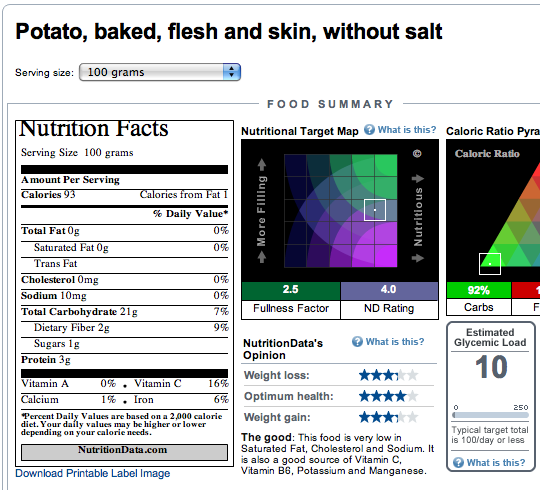
SOURCES:
SWEET POTATO NUTRIITION FACTS
POTATO NUTRITION FACTS
What is your optimal weight? Maybe it is the one that minimizes your waist-to-weight ratio
There is a significant amount of empirical evidence suggesting that, for a given individual and under normal circumstances, the optimal weight is the one that maximizes the ratio below, where: L = lean body mass, and T = total mass.
L / T
L is difficult and often costly to measure. T can be measured easily, as one’s total weight.
Through some simple algebraic manipulations, you can see below that the ratio above can be rewritten in terms of one’s body fat mass (F).
L / T = (T – F) / T = 1 – F / T
Therefore, in order to maximize L / T, one should maximize 1 – F / T. This essentially means that one should minimize the second term, or the ratio below, which is one’s body fat mass (F) divided by one’s weight (T).
F / T
So, you may say, all I have to do is to minimize my body fat percentage. The problem with this is that body fat percentage is very difficult to measure with precision, and, perhaps more importantly, body fat percentage is associated with lean body mass (and also weight) in a nonlinear way.
In English, it becomes increasingly difficult to retain lean body mass as one's body fat percentage goes down. Mathematically, body fat percentage (F / T) is a nonlinear function of T, where this function has the shape of a J curve.
This is what complicates matters, making the issue somewhat counterintuitive. Six-pack abs may look good, but many people would have to sacrifice too much lean body mass for their own good to get there. Genetics definitely plays a role here, as well as other factors such as age.
Keep in mind that this (i.e., F / T) is a ratio, not an absolute measure. Given this, and to facilitate measurement, we can replace F with a variable that is highly correlated with it, and that captures one or more important dimensions particularly well. This new variable would be a proxy for F. One the most widely used proxies in this type of context is waist circumference. We’ll refer to it as W.
W may well be a very good proxy, because it is a measure that is particularly sensitive to visceral body fat mass, an important dimension of body fat mass. W likely captures variations in visceral body fat mass at the levels where this type of body fat accumulation seems to cause health problems.
Therefore, the ratio that most of us would probably want to minimize is the following, where W is one’s waist circumference, and T is one’s weight.
W / T = waist / weight
Based on the experience of HCE () users, variations in this ratio are likely to be small and require 4-decimals or more to be captured. If you want to avoid having so many decimals, you can multiply the ratio by 1000. This will have no effect on the use of the ratio to find your optimal weight; it is analogous to multiplying a ratio by 100 to express it as a percentage.
Also based on the experience of HCE users, there are fluctuations that make the ratio look like it is changing direction when it is not actually doing that. Many of these fluctuations may be due to measurement error.
If you are obese, as you lose weight through dieting, the waist / weight ratio should go down, because you will be losing more body fat mass than lean body mass, in proportion to your total body mass.
It would arguably be wise to stop losing weight when the waist / weight ratio starts going up, because at that point you will be losing more lean body mass than body fat mass, in proportion to your total body mass.
One’s lowest waist / weight ratio at a given point in time should vary depending on a number of factors, including: diet, exercise, general lifestyle, and age. This lowest ratio will also be dependent on one’s height and genetic makeup.
Mathematically, this lowest ratio is the ratio at which d(W / T) / dT = 0 and d(d(W / T) / dT) / dT > 0. That is, the first derivative of W / T with respect to T equals zero, and the second derivative is greater than zero.
The lowest waist / weight ratio is unique to each individual, and can go up and down over time (e.g., resistance exercise will push it down). Here I am talking about one's lowest waist / weight ratio at a given point in time, not one's waist / weight ratio at a given point in time.
This optimal waist / weight ratio theory is one of the most compatible with evidence regarding the lowest mortality body mass index (, ). Nevertheless, it is another ratio that gets a lot of attention in the health-related literature. I am talking about the waist / hip ratio (). In this literature, waist circumference is often used alone, not as part of a ratio.
Tuesday, June 11, 2013
Fresh & Quick Summer Dinner
Summer is in full swing here. Hot days, flip flops, pool time, and quick dinners cooked outside on the grill. This meal is one of my favorite summertime suppers and is so easy to pull together. Fresh corn is begging to come home with me from the grocery store and I can't get enough of it. Tomato and avocado salad is a year-round favorite, and so colorful with this dish. And finally, a marinated skinless, boneless chicken breast is grilled to juicy perfection.

Marinade (Finger Lickin' Chicken Marinade from Food.com)
-for 4-6 chicken breasts
- 1 cup oil
- 1/2 cup vinegar
- 2 tablespoons Miracle Whip Light
- 3 tablespoons Worcestershire
- 2 tablespoons lemon juice
- salt and pepper to taste
- 2 tablespoons thyme
- 1 tablespoon garlic salt
Mix all the ingredients together and marinate for at least 30 minutes and up to overnight in the refrigerator. Grill the chicken for about 8 minutes on each side, depending on the size of the chicken.

This marinade makes for delicious chicken friends, really moist and flavorful.

Tomato & Avocado Salad
- Tomato (4)
- Avocado (3)
- Red onion (1/3 cup)
- Light ranch salad dressing (couple tablespoons)
- Tony Chachere salt-free seasoning (to taste)
Dice the tomato, avocado, and red onion and toss together with the dressing and seasoning.
Corn-on-the-Cob
- Shuck the corn and boil for about 8 minutes.

Happy summer friends!

Subscribe to:
Posts (Atom)